
TL;DR: Steel coil springs once defined the SUV. Today, manufacturers are replacing them with air suspension across nearly every premium and mid-premium model – and increasingly in mainstream ones too. The reasons come down to physics: modern SUVs are heavier, taller, and asked to do more contradictory things than ever before. Only adaptive air systems can reconcile those demands.
The SUV Problem That Steel Springs Can’t Solve
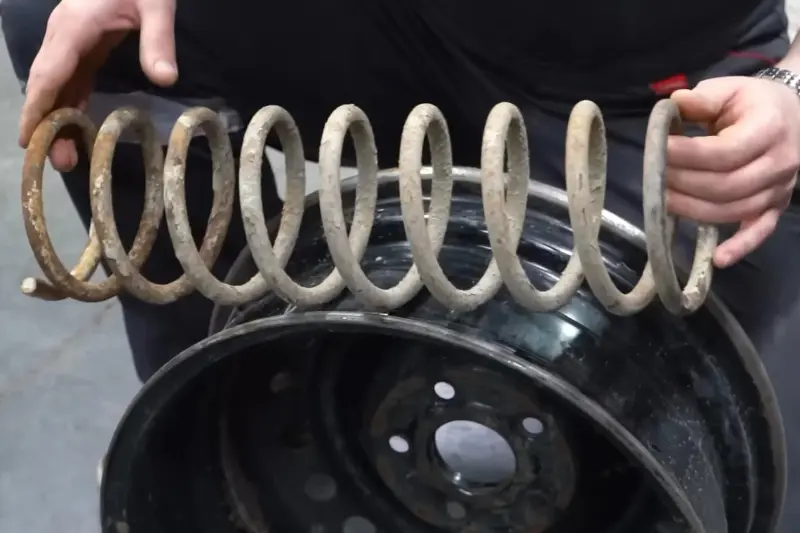
An SUV is, mechanically speaking, a compromise on wheels. It needs to ride high enough to clear obstacles, low enough to handle corners without rolling, soft enough to soak up rough roads, firm enough to tow and haul without sagging, and stable enough at motorway speeds to feel planted. A traditional steel coil setup can deliver maybe two of those qualities well. The rest are sacrificed.
This is fine for a basic crossover. It becomes a serious problem for a three-row family SUV that weighs 2,400 kg, carries seven people, tows a trailer at weekends, and is expected to feel composed at 130 km/h.
That contradiction is why air suspension has moved from a luxury exotic to a mainstream necessity.
What Steel Springs Actually Do (and Don’t Do)
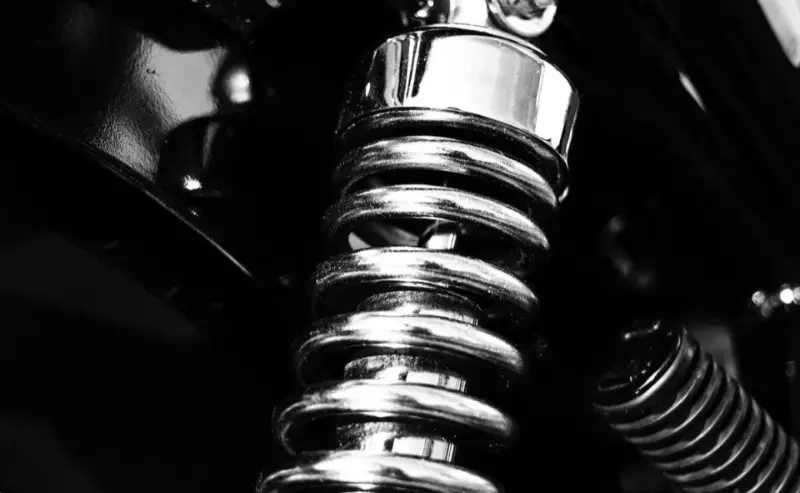
A steel coil spring has one basic job: to resist compression. When the wheel moves upward, the spring compresses; when the load is reduced, it expands again. This simple principle has made steel springs strong, predictable, durable, and widely used for decades.
But that simplicity also creates a limitation.
A conventional coil spring has a fixed spring rate. Engineers choose how stiff it should be during development, and once the vehicle is built, that value stays the same. The spring cannot adapt to different conditions. It does not know whether the car is carrying one person or five, whether the boot is empty or full, or whether the road is smooth, rough, fast, or slow.
That means every steel spring is a compromise.
A softer spring improves comfort when the vehicle is lightly loaded, but it can allow too much body movement when weight is added. The rear may sag, the car may feel less controlled, and braking or cornering can become less composed.
A stiffer spring gives better support under load and reduces body roll, but it can feel harsh or unsettled when the vehicle is empty. Instead of absorbing the road smoothly, the car may feel nervous over smaller bumps.
This is why many older SUV designs have a familiar character: comfortable in some situations, but bouncy when empty, sagging when loaded, leaning in corners, and pitching forward under braking.
Adaptive dampers can improve this, but they do not remove the core limitation. A damper controls how quickly the spring compresses and rebounds. It can reduce float, sharpen responses, or improve comfort, but it cannot change the spring itself. It can manage the movement, but it cannot turn a soft spring into a stiff one or restore ride height under load.
Air suspension solves the problem closer to the source.
Instead of using a fixed steel coil, it uses air pressure inside a chamber. Add air and the suspension becomes firmer. Release air and it becomes softer. This allows the vehicle to adjust its spring behaviour depending on load, road conditions, speed, and driving mode.
When the vehicle is loaded, the system can increase pressure to keep the body level. On motorways, it can lower the ride height for better stability. On rough roads, it can raise the vehicle for more ground clearance. In comfort driving, it can soften the ride; in dynamic driving, it can firm up to reduce roll and pitch.
Steel springs are not bad. They are proven and reliable. But they are passive.
Air suspension adds adaptability. It allows a large vehicle to feel more comfortable, more controlled, and more versatile because the suspension is no longer locked into one fixed compromise.
Why Manufacturers Made the Switch
The shift wasn’t driven by marketing. It was driven by what modern SUVs are being asked to do:
- Weight. Battery packs, additional safety structure, and larger footprints have pushed kerb weights up by hundreds of kilos. Heavier vehicles need adaptive damping to stay composed.
- Aerodynamics. Lowering the body at motorway speed reduces drag and improves both fuel economy and EV range. Only air suspension can do this on demand.
- Off-road capability. Models like the Grand Cherokee, Range Rover, and Touareg are expected to handle real terrain. Raising ride height for ground clearance and lowering it for loading is now table stakes.
- Towing and payload. Self-leveling keeps the headlights aimed correctly and the rear from squatting under load – something steel springs simply cannot do without expensive aftermarket helpers.
- Comfort expectations. Buyers in this segment expect S-Class-level ride quality regardless of road surface.
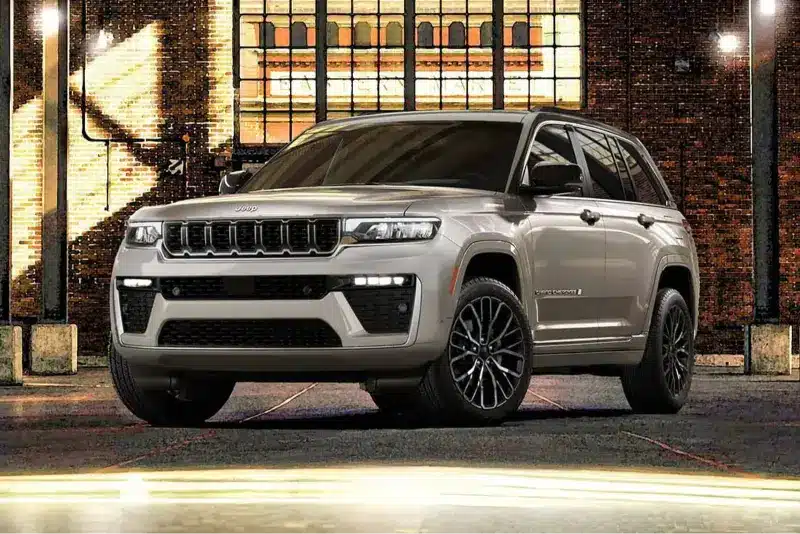
The Jeep Grand Cherokee is a useful case study. Once a body-on-frame brute with coil springs, it now offers a sophisticated air suspension system across higher trims – and replacement components for the Jeep Grand Cherokee air suspension are widely available through European specialists focused on pneumatic suspension for premium and luxury vehicles, making long-term ownership far more practical than skeptics once predicted.
Coil vs. Air: How They Compare
| Capability | Coil Springs | Air Suspension |
| Ride height | Fixed | Variable (typically 60–100 mm range) |
| Spring rate | Fixed at design | Variable with pressure |
| Self-leveling | No | Yes, automatic |
| Aerodynamic lowering | Not possible | Standard on most systems |
| Off-road raise | Requires aftermarket lift | Built-in |
| Tow squat compensation | Mechanical helpers needed | Automatic |
| Initial cost | Low | Higher |
| Long-term wear | Springs rarely fail | Bags and compressors wear, but rebuildable |
The trade-off is honest: air systems have more parts and those parts wear. But they’re also serviceable, and the parts ecosystem has matured to the point where keeping a 10-year-old air-sprung SUV on the road is straightforward.
The Mainstream Drift
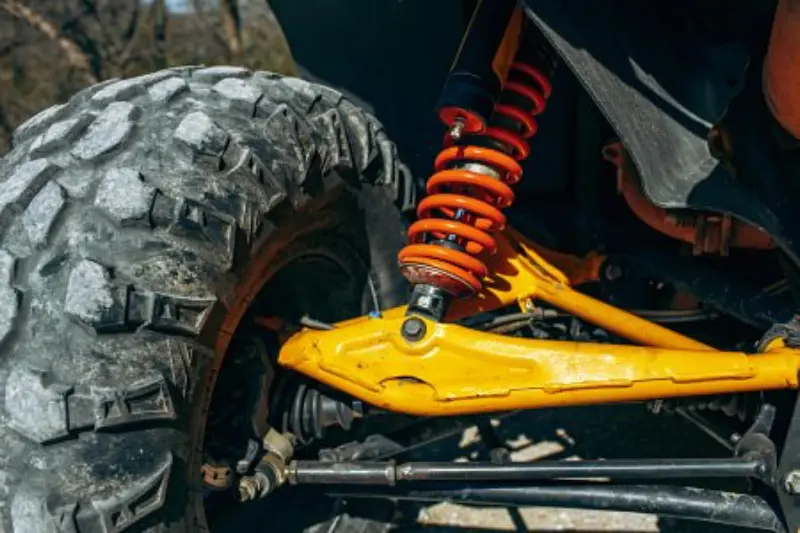
What’s notable now is how far down-market air suspension has moved. It used to appear only on flagship SUVs. Today it’s standard or optional on the Volkswagen Touareg, Audi Q7, Mercedes GLE, BMW X5, Range Rover Sport, Porsche Cayenne, Jeep Grand Cherokee, RAM 1500, and increasingly on mid-size electric SUVs where range optimization makes it almost mandatory. The list grows every model year.
The next decade will likely see air suspension become the default for any SUV above the compact segment, much as independent rear suspension became standard a generation ago.
FAQ
Are air suspensions reliable enough for long-term ownership?
Modern systems routinely cover 150,000+ km before major service. Air springs and compressors are wear items, but replacement parts from specialists make rebuilds far cheaper than dealer repairs.
Why do EVs almost always use air suspension?
Battery weight and aerodynamic efficiency. Lowering the body at speed can add meaningful range, and adaptive damping helps manage the heavier mass.
Can I retrofit air suspension to an SUV that came with coils?
Generally not practical. The systems are integrated with the vehicle’s electronics and chassis design, so retrofits are rare outside of specialist conversions.
What fails first on an air suspension?
Usually the air springs themselves, due to rubber fatigue and exposure to road salt. Compressors are the second most common wear point.
Is the Jeep Grand Cherokee’s air suspension worth keeping?
For most owners, yes. Reverting to coils removes the very capabilities the vehicle was engineered around – ride height adjustment, self-leveling, and ride refinement. Replacement parts are readily available, making maintenance the more sensible path.


